
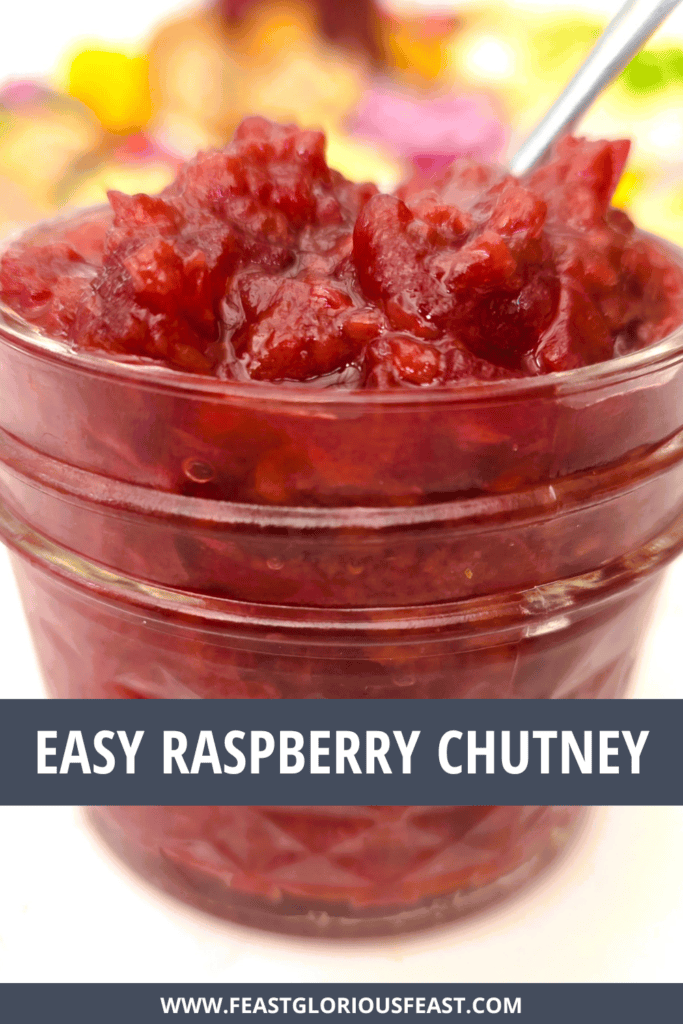
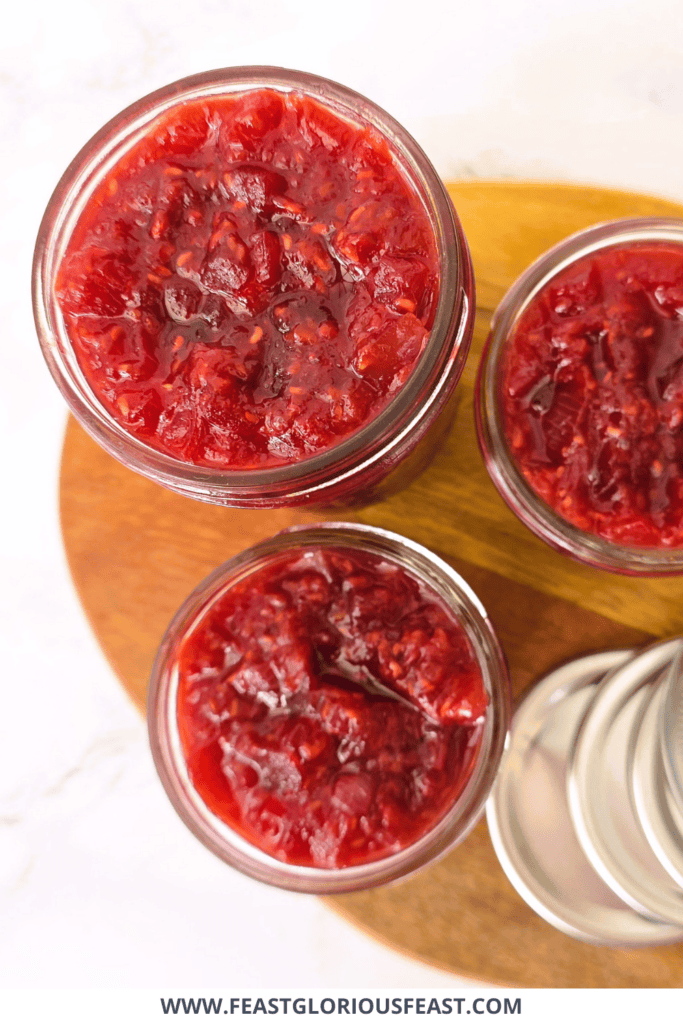
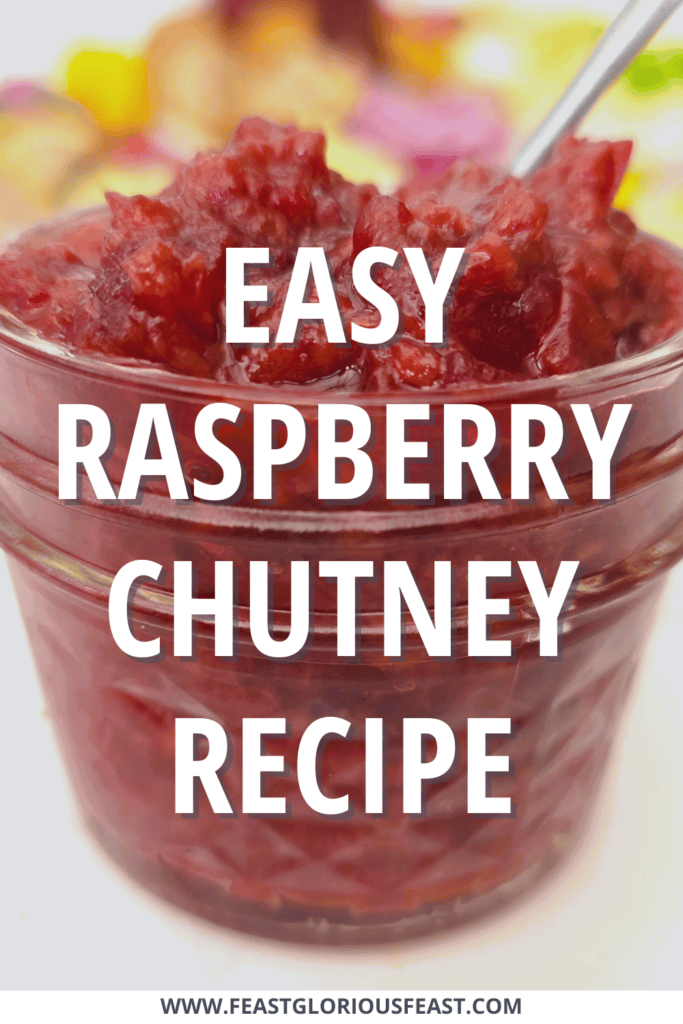
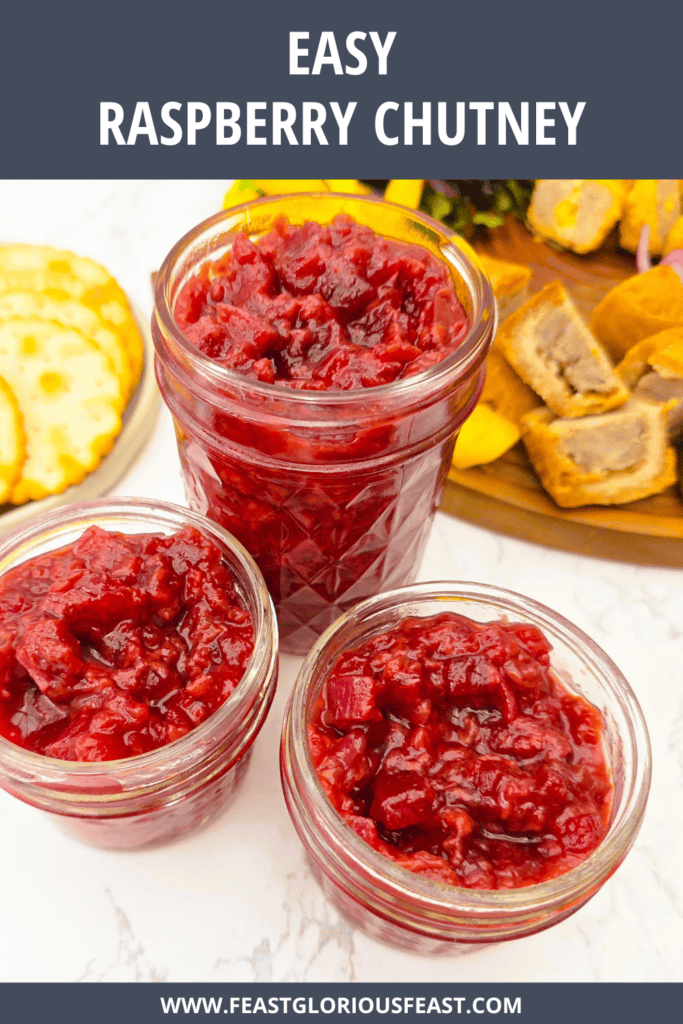
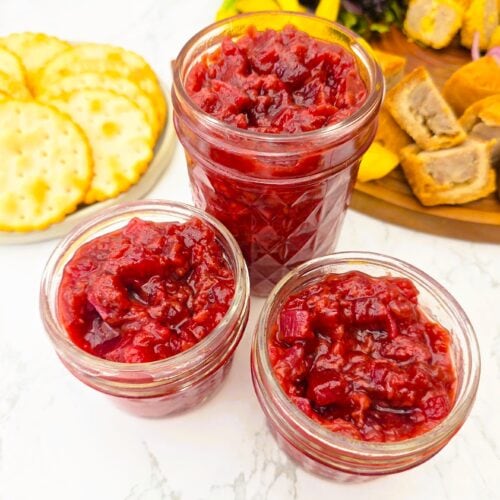
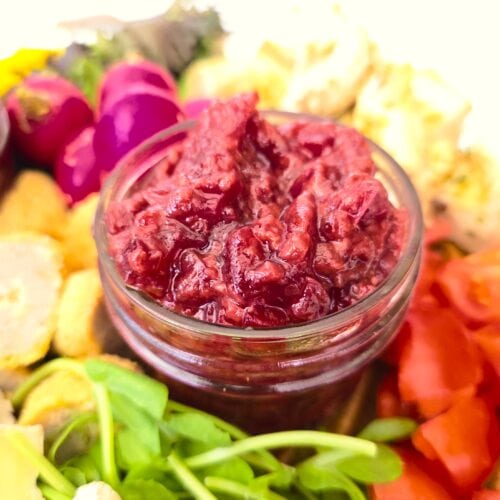
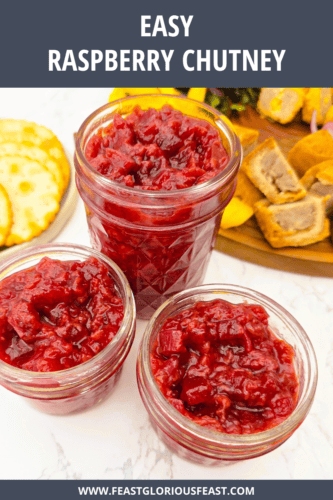
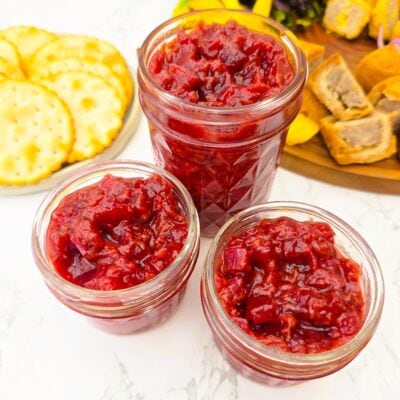
This Easy Raspberry Chutney Recipe is fruity, sharp and sweet in all the right places. You can use fresh or frozen raspberries so it’s easy to make year round and it pairs beautifully with both creamy and mild or richer sharper cheeses. Along with a myriad of other uses of course.
This post may contain affiliate links. Please refer to my Disclosures Page for more details.
My collection of fruity chutney recipes is every expanding. Please don’t be put off by these more unusual variations, whilst a lighter raspberry version might not be so usual, it would be foolish to overlook. Sweet fruits served with savoury meats and cheeses has a long culinary tradition.
My chutney making method is very simple – for the most part it involves throwing everything into the pan, letting it simmer to cook through the vegetables and then boiling off most the liquid until the thick and sticky chutney remains. This recipe is slightly different because I add in half the berries mid way through the cooking. This gives the chutney a little extra texture but if you want to throw them all in – go for it.
More Chutney Recipes
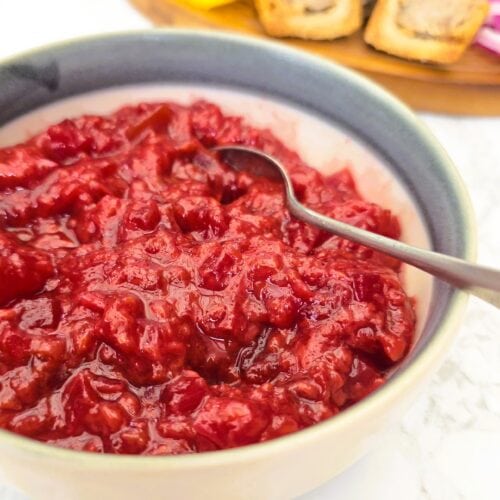
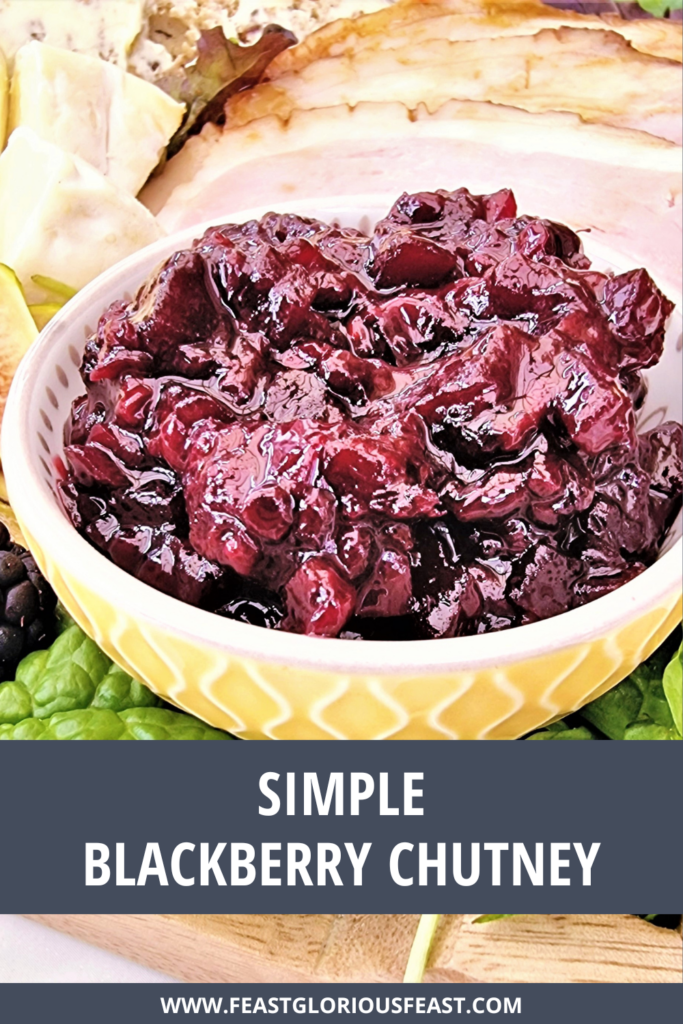
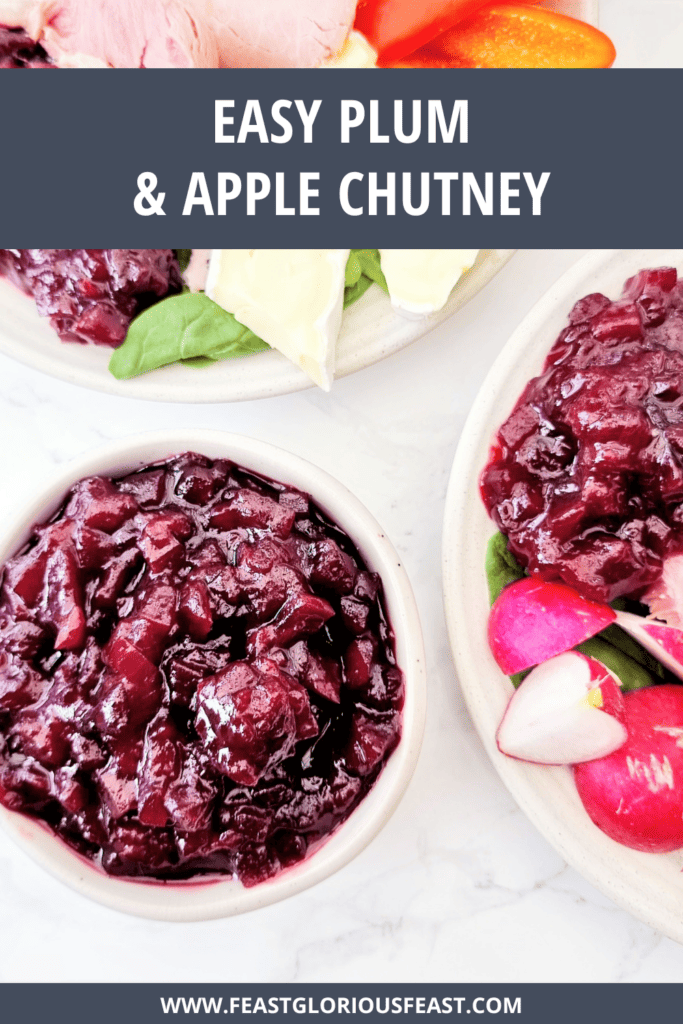
You can of course make delicious savoury chutneys from many other fruit, it is always worth experimenting or you can try some of my other recipes.

How to Serve Raspberry Chutney
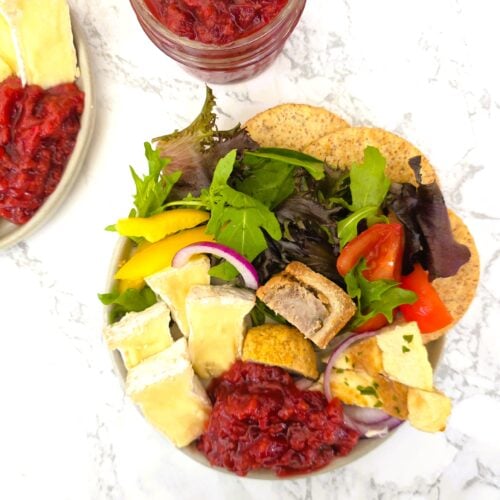
You only need to wait a couple of days before this chutney is ready to eat. Which is great news for impatient folk like me. Once opened, I do keep it in the fridge but try to take it out a little in advance of eating to it warms a little. This allows the flavours to shine much more than when it is very cold.
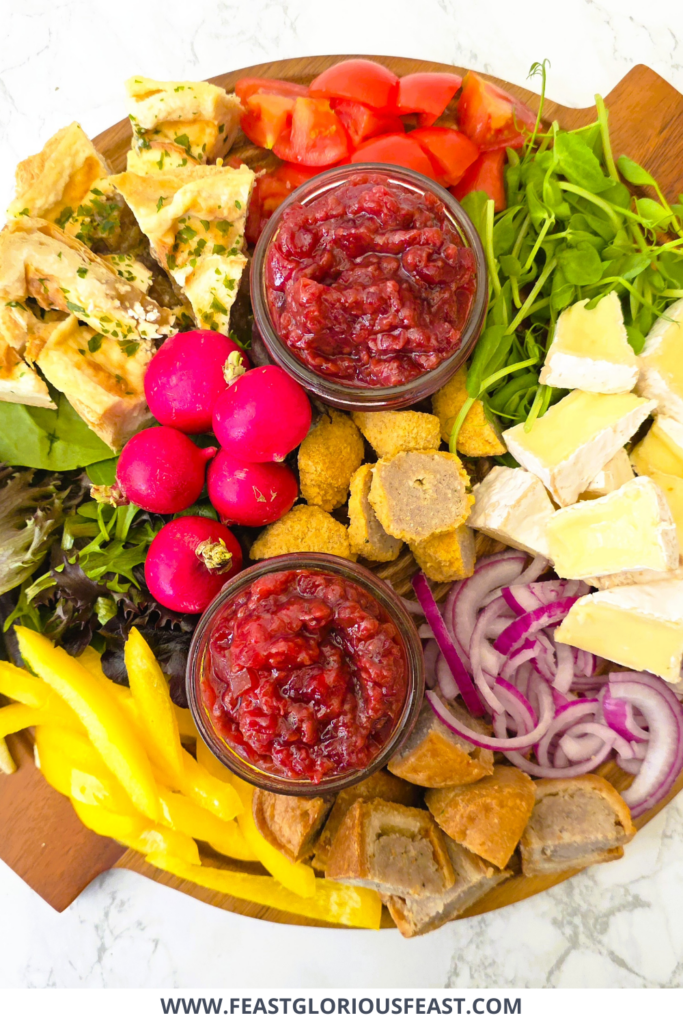
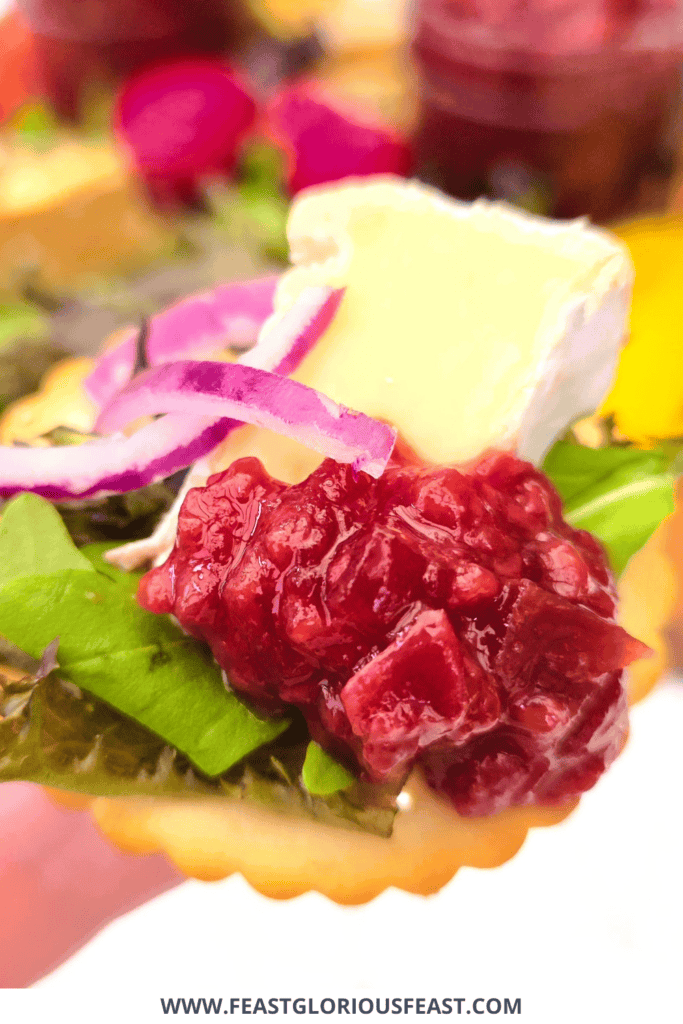
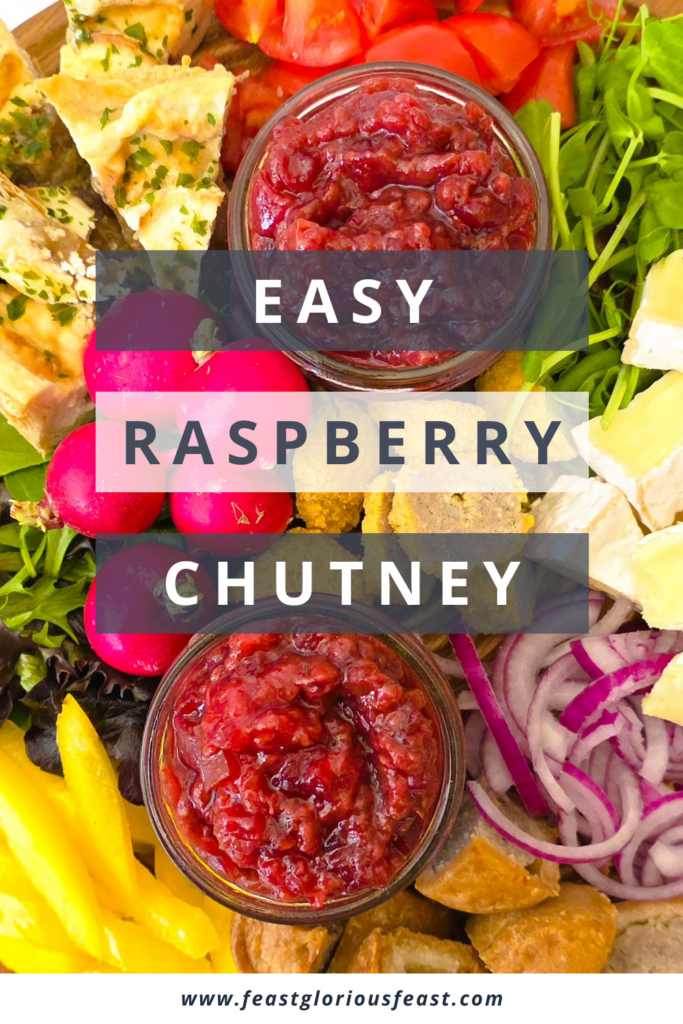
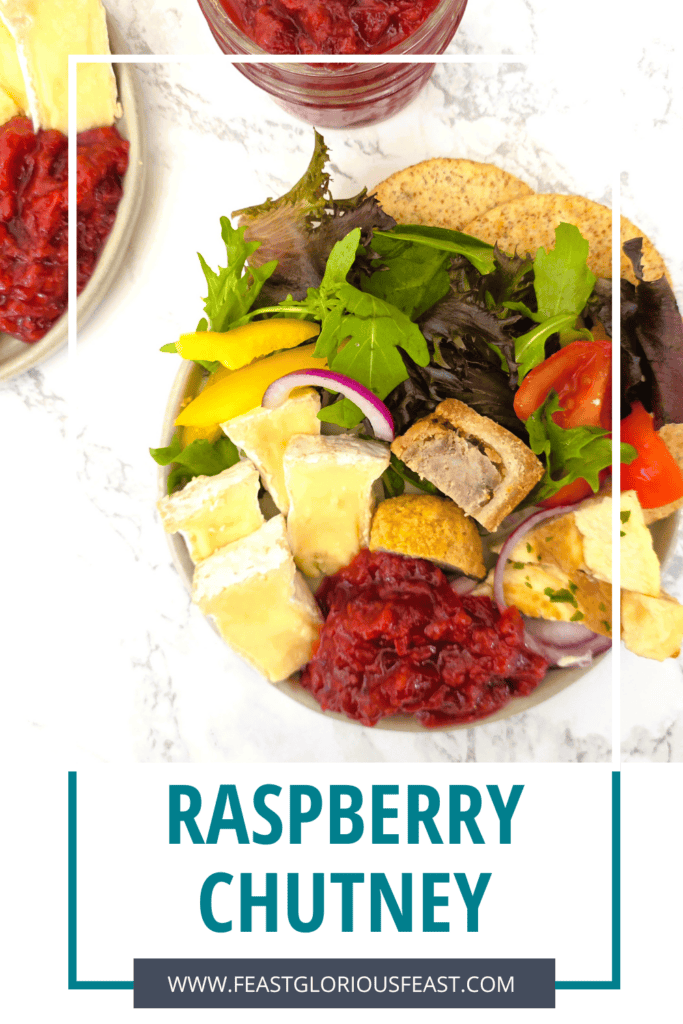
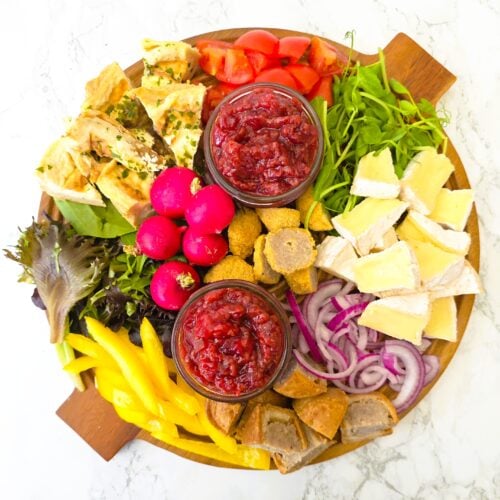
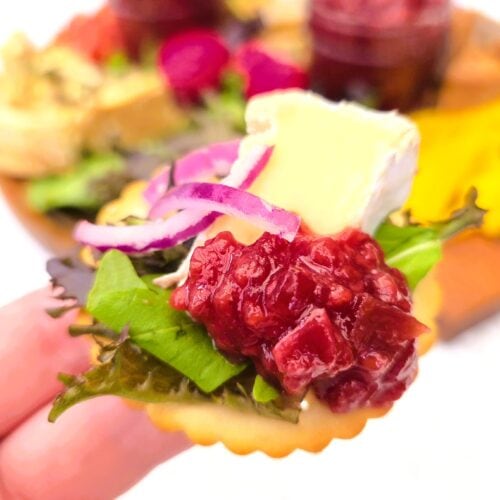
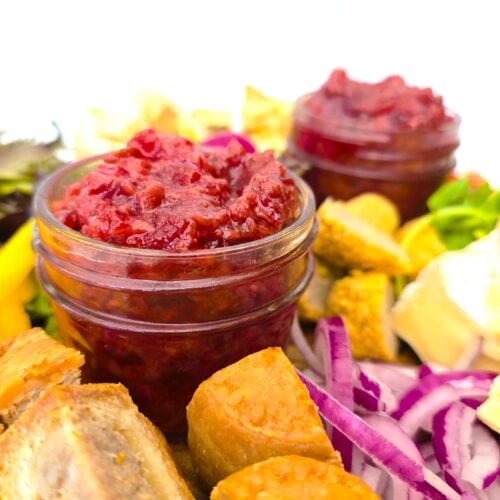
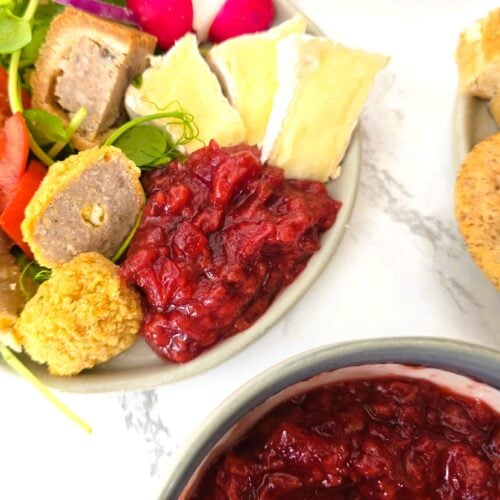
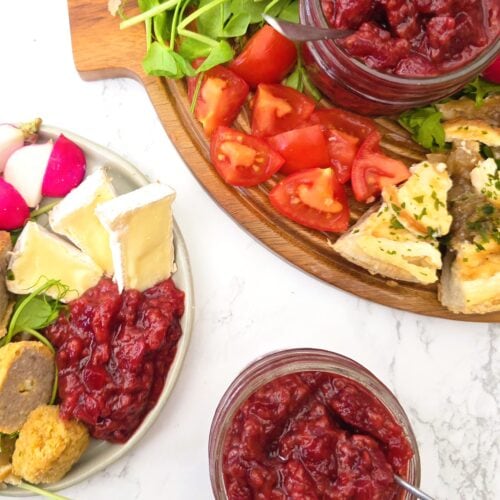
A cheeseboard, a buffet or a ploughman’s type lunch is of course the most obvious way to serve a chutney. I’ve gone all out with some quiche, crispy radishes, fresh tomatoes and salad leaves, mini pork pies, a pile of creamy brie and crunchy red onions and peppers. Throw in some cracker or crusty bread to srve and you can’t really go wrong.
But of course you can also add chutney when you’re cooking. My cheese and chutney sausage rolls are a great starting point. Add a layer to cheese on toast or a ham and cheese toastie.
Or go a little more out there and use it as a condiment like you might a cranberry sauce. Serve with sliced glazed ham – indeed you could use the chutney to glaze them ham. It also goes beautifully with almost all cuts and joints of pork.
Easy Raspberry Chutney Ingredients
Raspberries
It doesn’t matter if you are using fresh, frozen, home-grown or store-bought raspberries, this recipe will work out great.
Frozen raspberries can go straight in the pan or be thawed first. Just make sure to start off heating them on a low heat until they are thawed.
You can also substitute or in mix raspberry adjacent fruits like cloudberries, loganberries, or tayberries.
Onion
Use whatever white/brown or red/purple onions you have on hand, either will provide the desired savoury note.
Apple
Again you can use whatever type of apple you have on hand. Cooking apples like bramley apples or any eating apple will work in this recipe – it is pretty flexible.
You do not need to peel the apples but you will need to cut out the core and seeds.
Vinegar
To keep the flavours bright, I’ve used white wine vinegar. You can also use cyder vinegar. You don’t want to use actual white vinegar, that would be too harsh in flavour, I keep that for cleaning, not eating!
If you have something darker like a red wine vinegar, you can use that. But be aware that you will end up with a darker coloured chutney. Malt and balsamic vinegars are options best avoided – the distinctive flavour is just too much.
Sugar
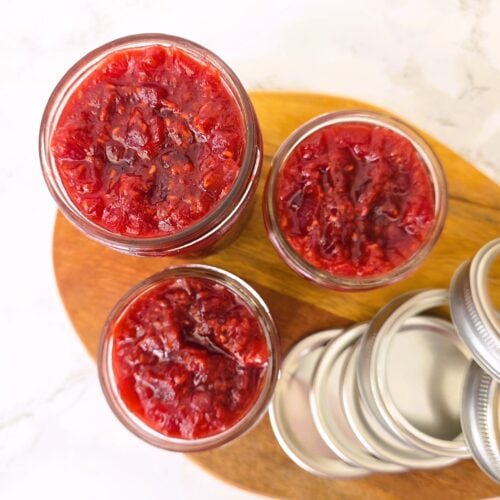
Although you might assume that I’ve used white sugar, I have actually plumped for light brown sugar. A chutney does ideally need those richer caramel notes of the brown sugar.
White is a perfectly acceptable substitute but I wouldn’t recommend using dark brown or demerara sugar. The flavour is too strong and the texture too crunchy respectively.
Salt
Sea salt flakes such as Maldon are always my preference and all of my recipes specify using them. If you are using a free flowing fine or table salt, you will need to halve the amount in the recipe.
Be Flexible
You can use pretty much any of my berry chutney recipes as a base to switch up the fruit. You just need to think about which kind of vinegar and which kind of sugar you want to pay for it. Or, if you need more of a steer, I do have a whole collection of recipe for you to choose from.
So assuming that we’re sticking with raspberries as the main flavour, the next thing to consider is things to add. It’s very common to add a splash of booze to a chutney, especially when making it as a lovely homemade gift. To enhance the raspberry flavour, you could add a little chambord – a raspberry liqueur with a brandy base. For a complimentary orange hint then cointreau or a generic triple sec is your friend. A drop of pork will make a darker and richer chutney. But let your imagination go wild, just be cautious with how much you add and make sure to add it right near the end of cooking.
Another option is to add a citrus hit. You can replace some of the water with orange juice or simply add some lemon or orange zest near to the end of cooking.
For a spicy raspberry chutney, add some finely chopped red chilli or dried chilli flakes with the rest of the ingredients at the beginning of the recipe. Or for a more spicy note with a hint of savoury, add a good few turns of freshly cracked black pepper near the end of cooking.
Vegetarian or Vegan Raspberry Chutney
This raspberry chutney is both vegetarian and vegan friendly as written.
Make Allergy Friendly Raspberry Chutney
This recipe is free from egg, dairy, gluten and nuts.
Please note that this recipe may contain other allergens not referred to above and any variations suggested have not been tested unless otherwise stated. For more information regarding any dietary information provided on this website, please refer to my Nutritional Disclaimer.
Equipment Notes for Easy Raspberry Chutney
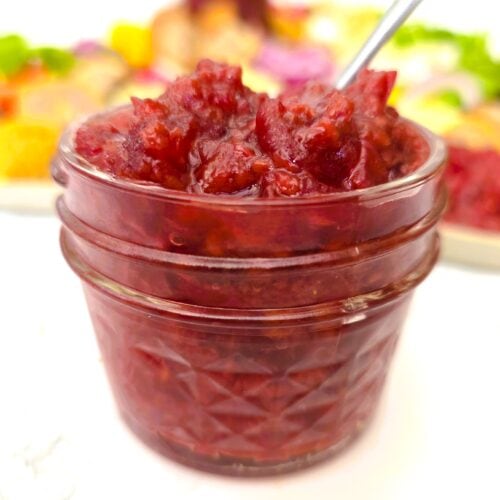
Unlike with jam, you don’t need to use an extra large pan to make chutney. As long as the ingredients fit in and there is room to stir without chutney spilling everywhere, a regular saucepan is big enough.
As always, basics like scales, measuring spoons and a silicone spatula will be needed. Silicone means that you can properly scrape chutney from the sides of the pan which will prevent burning.
A comprehensive list of the equipment used to make this recipe is included in the main recipe card below. Click on any item to see an example. There are no hard and fast rules so many items can be sensibly substituted to achieve the same results.
How to Sterilise Jars and Preserve/Can Chutney
There is a whole world of variations and advice for how you should prepare your jars and deal with the jars once they’re sealed. They vary from person to person and country to country.
Here in the UK we largely make sure that the jars are properly sterilised, fill the jars with the hot chutney, seal them and that’s that. In the US it is almost a given that the jars will then be “processed” to complete the “canning” process. I have purposely provided no links here – if you’d like to learn more about canning, Google is your friend.
There are a lot of strong feelings about this in the “canning community” (yes there is one) which I have no interest in being drawn into. All I know is that UK cooks have been making jams, chutneys and preserves for a very long time without any issues. Therefore I am more than happy to follow the UK process for my chutneys.
Jar Sterilisation Options
There are several ways that you can sterilise your jam jars.
- Run the jars and lids through a hot wash in the dishwasher.
- Bake the jars and lids in the oven on a baking tray.
- Microwave the jars and boil the lids in water.
- Boil the jars and lids in water.
Whichever method you choose the only important thing is to make sure that the jars and lids are left to dry without being touched. And that you do not under any circumstances touch the inside of the jars or lids as this can contaminate them and undo your sterilisation. Tongs are your friend.
For the record, I usually use the dishwasher method.
How to Tell if the Jar is Sealed
It is essential to add the lid to the hot jars filled with the hot chutney straight away. As the jar and contents cool, a vacuum is created in the jar and the lid will be pulled downwards. To help this, I often turn my jars upside down to cool.
This means that when you press the lid, it doesn’t move or pop. When you open a jar of properly sealed chutney, the lid will then pop. And an opened or not properly sealed jar will pop when you press it.
If your jars don’t seal properly, you can either keep the jar in the fridge and eat it relatively quickly or go though a canning process to seal them. The choice is yours.
Get Ahead
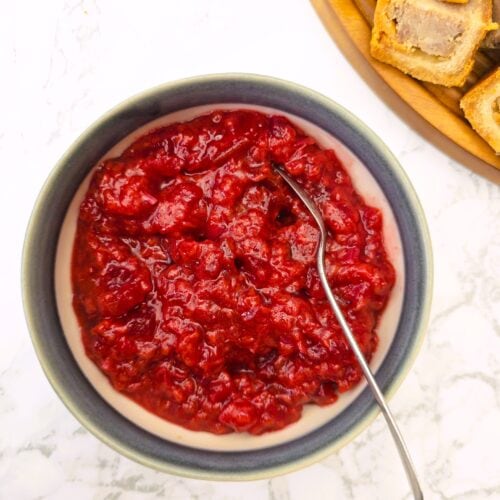
It is essential to get ahead when making chutney – it needs some time to mature so that the flavours meld and the vinegar flavour mellows. I recommend waiting at least 3 days but if you can wait up to a month, you won’t regret it.
If you are going to properly can and seal the jars, you can make chutney many months in advance. This is ideal for gifting etc.
If you do want to make the jars shelf stable, you will need to sterilise your jars and follow procedures to make sure they are sealed properly.
It will keep for years sealed and many months in the fridge once the jar is opened. You must be careful to ensure that you don’t cross contaminate however – a bit of rogue butter on a knife or a crumb of cheese can make a preserve spoil much earlier than it should.
Leftover Raspberry Chutney
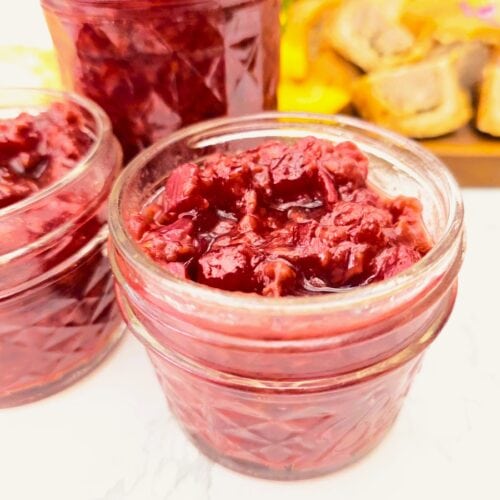
Leftover chutney isn’t really a thing, just put the jar back in the fridge until next time you
Easy Raspberry Chutney Tips
You don’t need to stand and stir the chutney the whole time it is cooking. But it is important to make sure it is given a stir as everything is melting together. And then I tend to hover a little more towards the end of cooking as it is starting to thicken up.
The actual cooking time will vary depending on the quantity you make and the size pan you use. A pan where there is less visible surface area will take longer to evaporate some of the liquid. A wider pan like the one I used will be quicker.
The trick is to make sure that the chutney cooks for at least half an hour. This gives the onion and apple enough chance to soften. If it is still quite thin after this time, then you can turn up the heat to boil off the liquids faster.
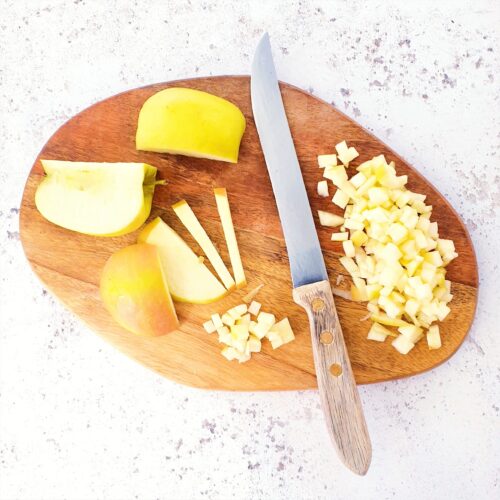
I cut the onion and apple very fine in this recipe because whilst they do provide bulk and body to the chutney, I don’t like large visible chunks. They also cook down faster. The hero of this chutney is the raspberry.
You can add all the berries at the beginning of the cooking time if you prefer.
Don’t forget to let me know in the comments if you try making this recipe – I want to know what you think and if you made any substitutions, how did it turn out?
Still Have Questions?
Simple! Just contact me and I will do my best to help as quickly as I am able. Head over to my Contact Me page, any of my social media channels or post a comment at the bottom of this page and I’ll see what I can do.
Pin Easy Raspberry Chutney Recipe For Later
Hit one of the share buttons to save this page to your Pinterest boards so you can come back and find it at anytime!
Keep Up to Date
Make sure you SUBSCRIBE to my newsletter and avoid missing out on any of my newest and bonus content. Don’t worry, I promise not to spam you or bombard you too often. Plus you’ll receive a copy of my FREE 7 Day International Meal Plan!
Also please don’t forget to follow me over on my social media channels over at Facebook, Instagram and Pinterest. I love to interact with my followers and I’d love you to share my content with your friends too.
More Berry Recipes

The Recipe
Easy Raspberry Chutney Recipe
Equipment
Ingredients
- 90 g Onion
- 150 g Apple
- 180 ml White Wine/Cyder/Rice Wine Vinegar
- 120 g Light Brown Sugar
- ½ tsp Sea Salt Flakes
- 500 g Raspberries - divided in half
- 150 ml Water
Instructions
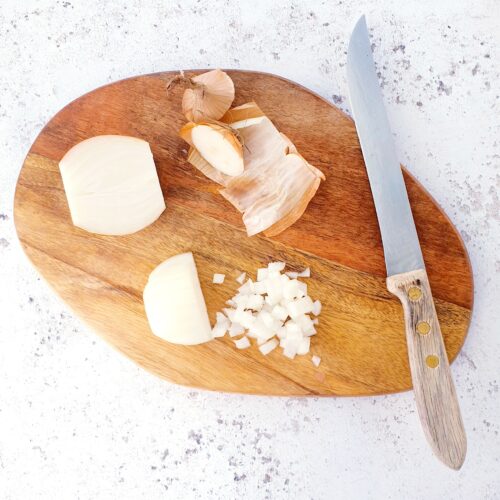
- Finely chop roughly 90g Onion.

- Finely chop 150g Apple – do not include the core but there is no need to peel.
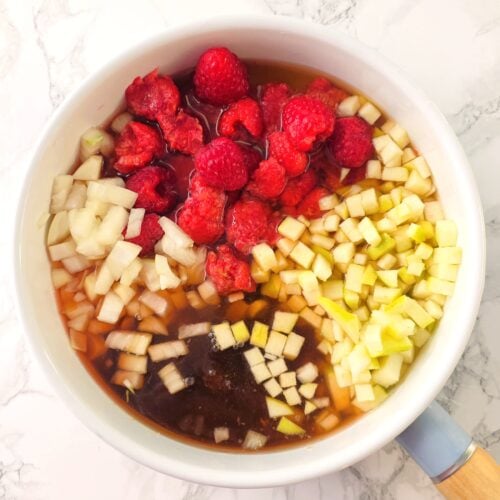
- Add the chopped onion and apple to a saucepan along with 180ml White Wine Vinegar, 120g Light Brown Sugar, ½ tsp Sea Salt Flakes, 250g Raspberries and 150ml Water.
- Place on a medium high heat and keep stirring until the mixture starts to boil.Turn the heat down so it is just simmering and cook for around 15 minutes. Give it a stir every 5 or 10 minutes to make sure nothing is sticking. It is a good idea to keep a closer eye on it the thicker it gets.
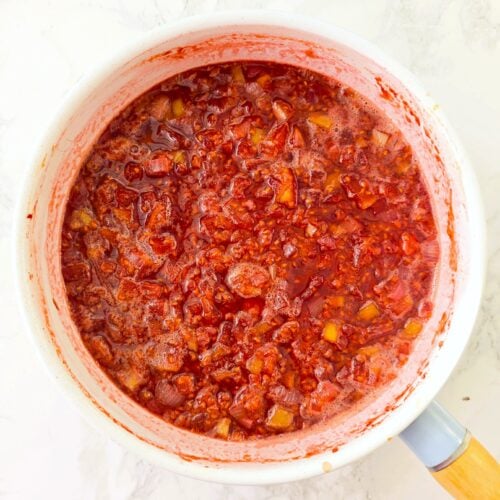
- Add the remaining 250g Raspberries to the pan.
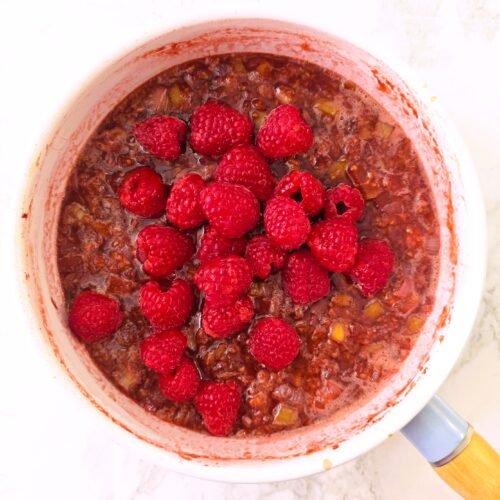
- Stir in and leave to simmer for a further 15 minutes. You will need to stir more regularly towards the end of the cooking time to ensure that nothing is catching on the bottom of the pan.
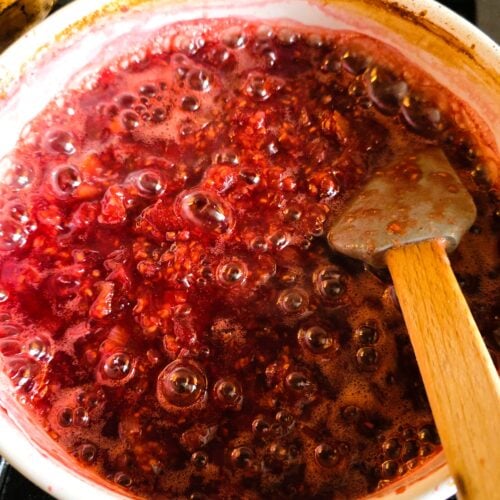
- The chutney is ready once you can drag your spatula through and the gap doesn’t immediately fill with liquid. If you need to, you can turn the heat up a little and continue to cook any excess liquid away until it is done.
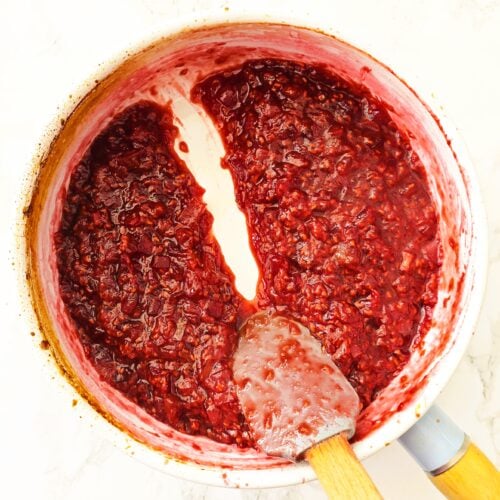
- Carefully spoon the hot chutney into jars or your preferred container.
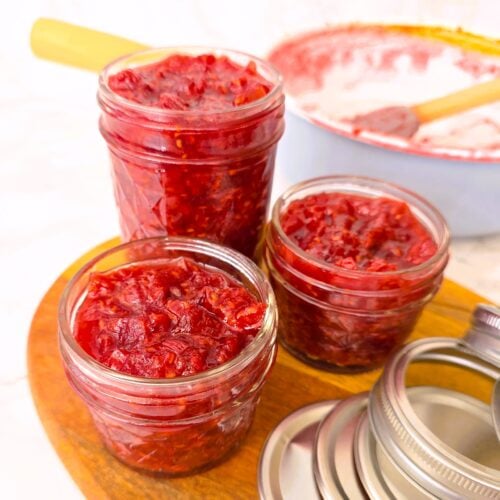
- Ideally allow a minimum of 3 days to help the flavours develop before tucking in.
Karen says
I love raspberries but had never thought to make a chutney with them. I’d some frozen raspberries in my freezer and I made a batch. Delicious and the perfect accompaniment to my cheeseboard.
Janice says
I never thought to make chutney with raspberries, but it was definitely worth making. Lovely flavours.