
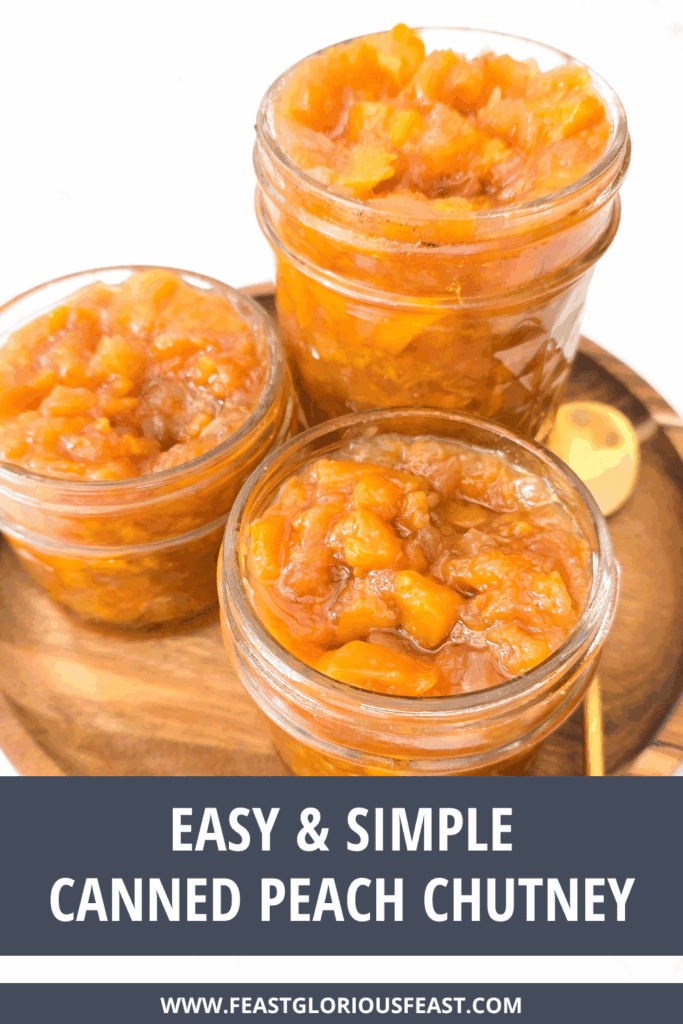


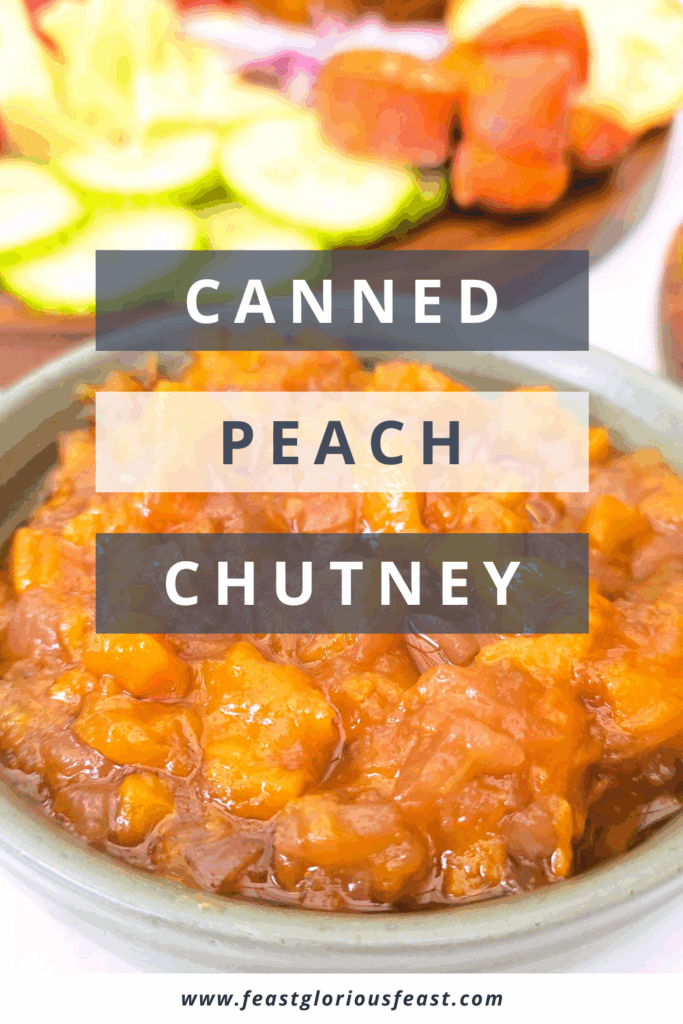


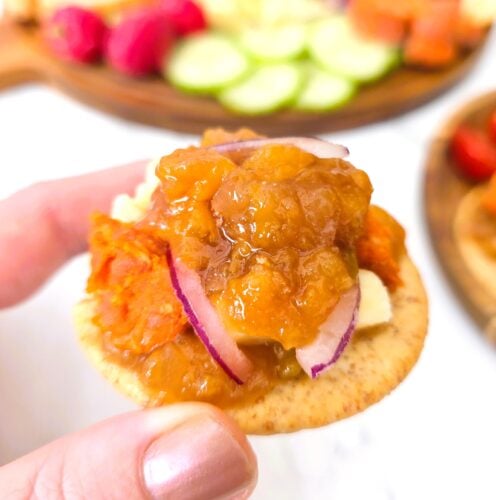
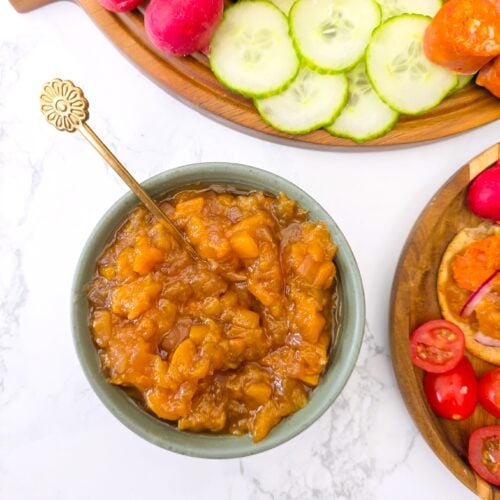
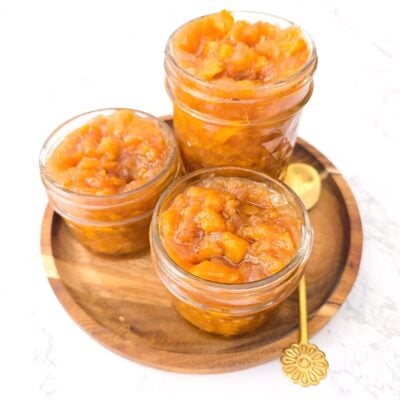
This Easy Canned Peach Chutney Recipe couldn’t be any easier – simply chop the ingredients, throw them in the pan and cook until reduced and luscious. Tinned peaches are economical, always in season and never underripe. And with the rest of the ingredients kept simple, their beautiful flavour shines though.
This post may contain affiliate links. Please refer to my Disclosures Page for more details.
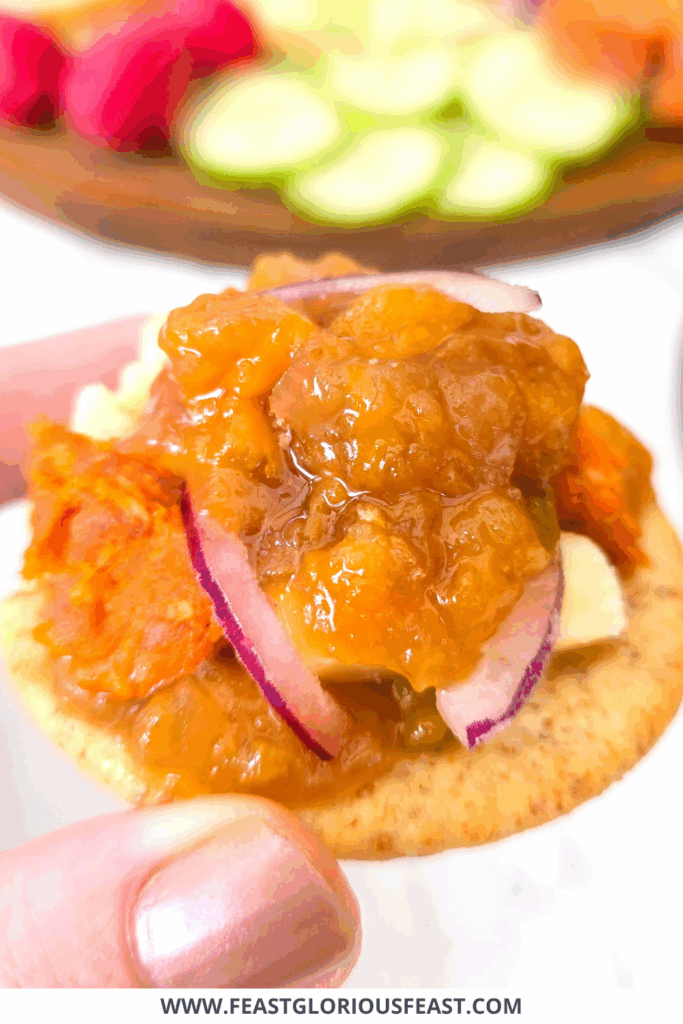
Keeping the flavours simple so the peach flavour shines through is really what drove the development of this recipe. It can be very easy with a chutney for the vinegar and sugar to take over. And of course adding secondary flavours masks the main fruit even more. This recipe achieved everything I wanted. And it is absolutely phenomenal with cheese and crackers.
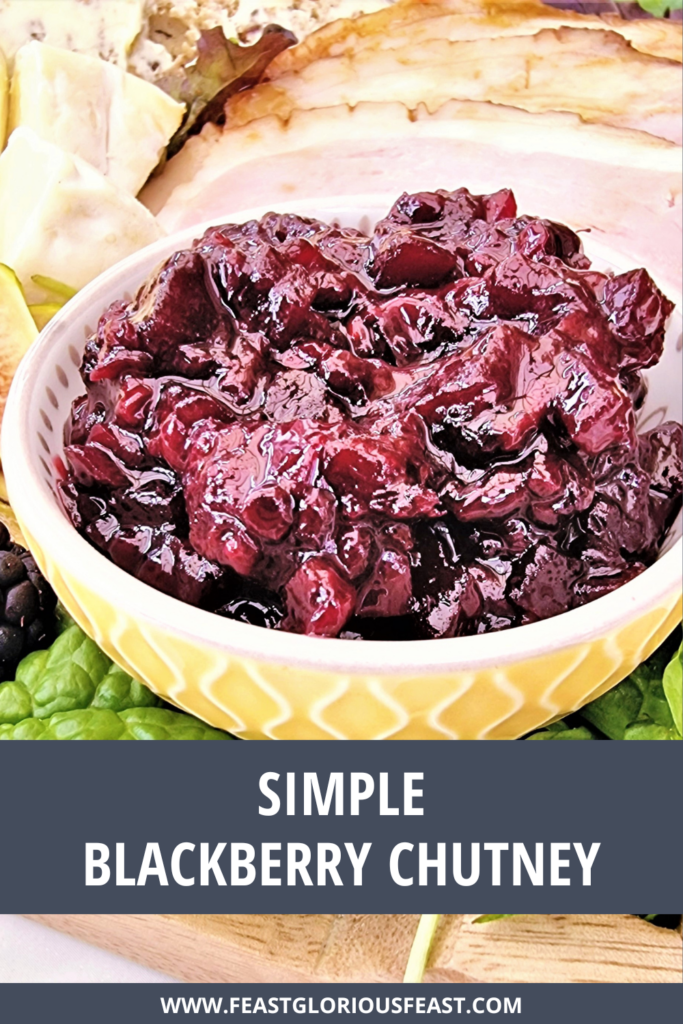
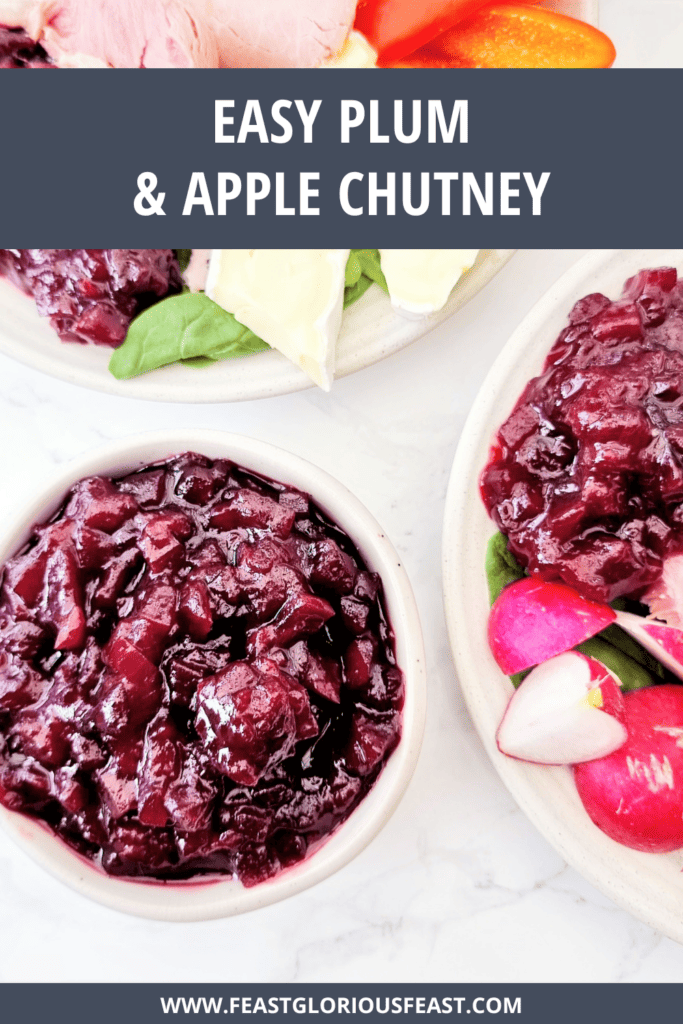
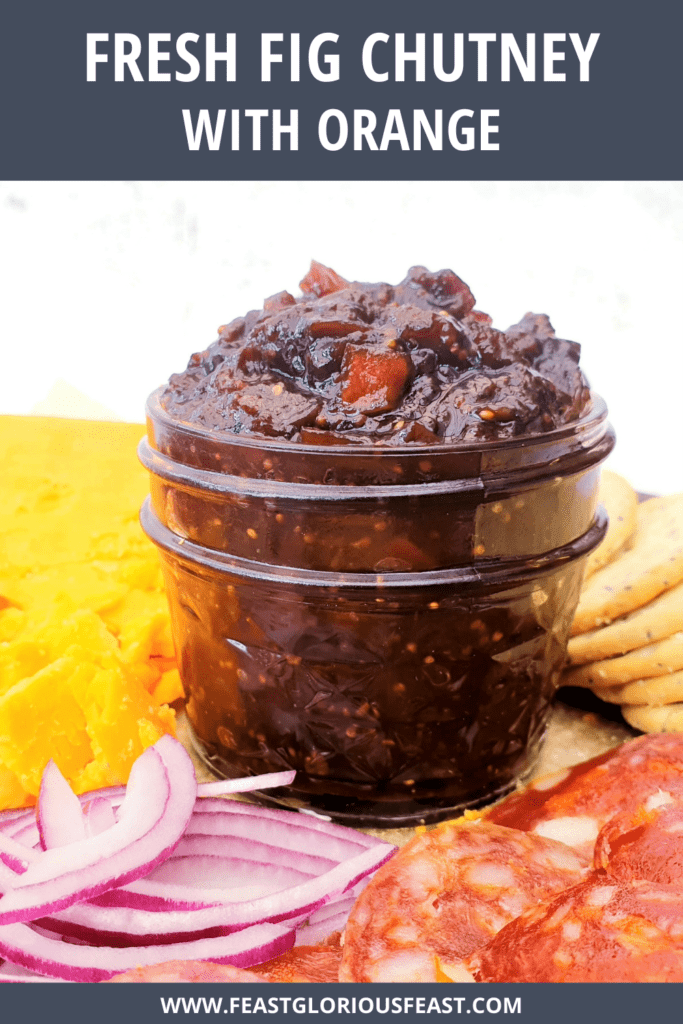
You can of course make delicious savoury chutneys from many other fruit, it is always worth experimenting or you can try some of my other recipes.

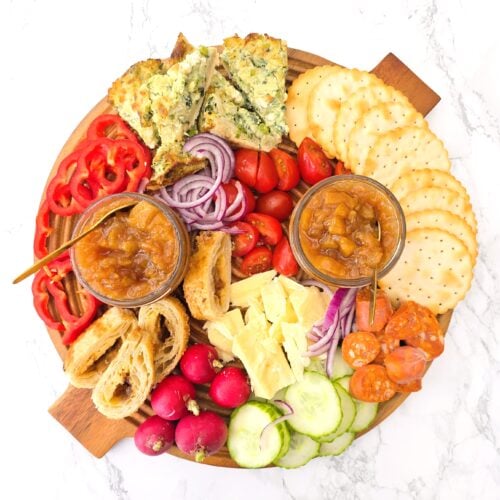
How to Serve Peach Chutney
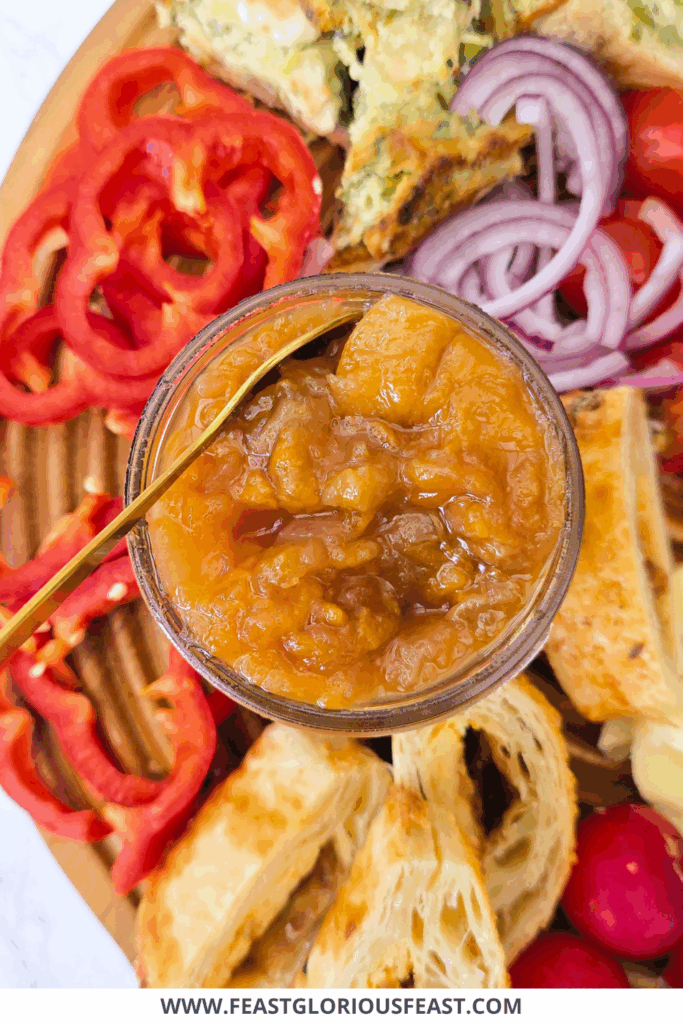
Room temperature is key for the flavours of a chutney although once opened, it should be kept in the fridge. So a little forward planning can be key to getting the most out of the chutney.
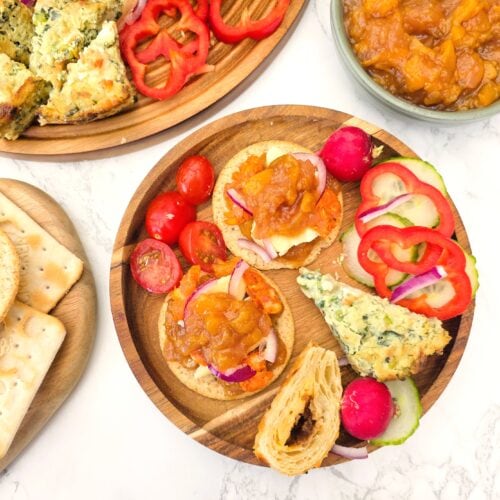
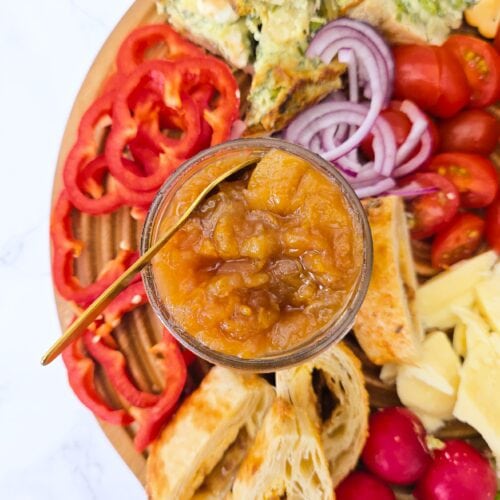
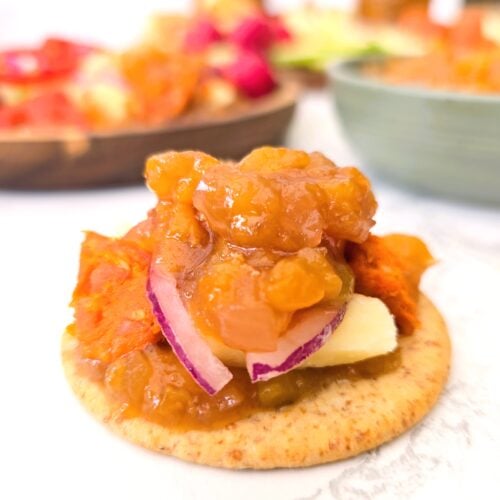
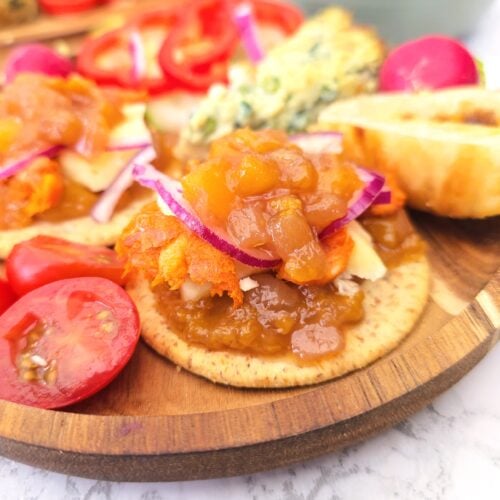
Of course chutney is ideal to serve with cheese. I’ve taken a light route for the photographs on this page with lots of fresh salad ingredients, water crackers and some pastries to head slightly in the direction of a ploughman’s.
You also shouldn’t overlook the joy of serving chutney as a condiment with a hot meal. I especially love it with thick slices of boiled ham or even a gammon steak.
Canned Peach Chutney Ingredients
Peaches
I am obsessed with canned peaches. Or tinned peaches if you prefer. I prefer to buy the ones that come in juice rather than syrup as the juice effectively turns into a syrup anyway. Half of the juice is used in the chutney and this reduces the amount of sugar.
You can usually buy the peaches as pieces, slices or halves. They are always peeled. I am perfectly happy buying the budget option. These are usually random shaped pieces, but at they’re being cut into small pieces anyway, it really doesn’t matter.
You can use fresh peaches in place of the tinned. But you will need to make sure that they are peeled, the stone is removed and that they are good and ripe. All of these steps are not needed when using canned.
You absolutely can make a chutney with fancy jarred peaches in delicious sounding alcohol. But honestly I would reserve these pricier options for something where they’re allowed to shine more than they will in this chutney.
Onion
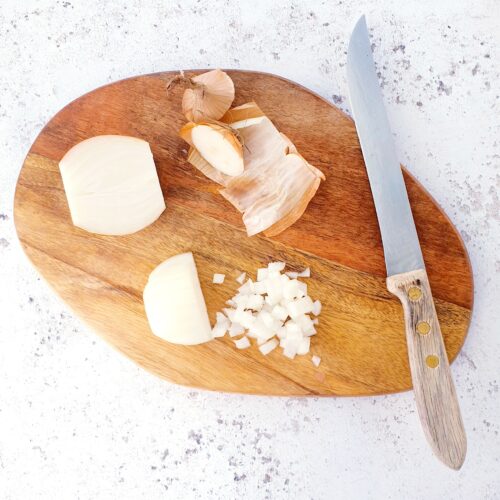
The onion is essential to the recipe for adding body and the savoury notes that prevent this from being a jam recipe. Sticking with white onion will preserve the lightness of the chutney. You can use red onion if you prefer but be aware it may make the chutney look a little muddy.
Apple
The apple adds a lot of body to the chutney and I use it in basically every chutney recipe. I prefer to use regular eating apples rather than cookers as that tart element isn’t needed here.
Thinking about the colour of this chutney, I did pick green skinned apples over red. You can use red skins but again, it will darken the chutney. You don’t need to peel the apples but if you have red ones, it wouldn’t be crazy to do so.
Vinegar
Keeping with the keep-things-light theme of this recipe, I’ve used white wine vinegar. You can also use cyder vinegar. You don’t want to use actual white vinegar, that would be too harsh in flavour, I keep that for cleaning, not eating!
If you have something darker like a red wine vinegar, you can use that. But as with other ingredient swaps, just be aware that you will end up with a darker coloured chutney. Malt vinegar is one darker option best avoided – the distinctive flavour is just too much.

Sugar
Although by this point you might be assuming that I’ve used white sugar, I have actually plumped for light brown sugar. A chutney does ideally need those richer caramel notes of the brown sugar.
White is a perfectly acceptable substitute but I wouldn’t recommend using dark brown or demerara sugar. The flavour is too strong and the texture too crunchy respectively.
Salt
Sea salt flakes such as Maldon are always my preference and all of my recipes specify using them. If you are using a free flowing fine or table salt, you will need to halve the amount in the recipe.

Be Flexible
I’ve written this recipe to be super simple and truly highlighting the peach flavour. But that doesn’t mean that you can’t change things and/pr make additions.
For starters, you can totally change the fruit! This recipe is going to work just as well with tinned apricots. Even pear or mango should work with a straight one to one swap.
For an especially festive chutney, you can add some alcohol – I’d recommend around 2 tbsp added around halfway through cooking. Brandy or whiskey would be the most traditional options but Cointreau, bourbon or even Southern Comfort would go really well.
You can add some spice with very finely chopped red chilli or dried chilli flakes. Fresh grated ginger would be a classic flavour addition. Fresh thyme, especially lemon thyme would add an extra dimension – I would add this right at the end of cooking and in rather a small amount so it doesn’t become overpowering.
Vegetarian or Vegan Peach Chutney
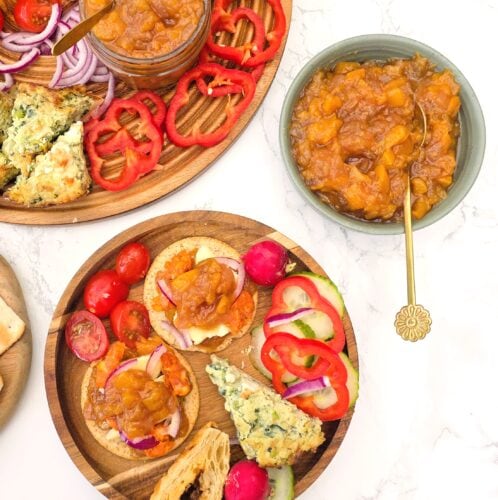
This canned peach chutney is suitable for vegetarians and vegans as written.
Make Allergy Friendly Chutney
This recipe is free from egg, dairy, gluten and nuts. Saying this, some vinegar can contain gluten so do check the label – white wine or cider vinegar is however unlikely to.
Please note that this recipe may contain other allergens not referred to above and any variations suggested have not been tested unless otherwise stated. For more information regarding any dietary information provided on this website, please refer to my Nutritional Disclaimer.
Equipment Notes for Canned Peach Chutney
Unlike with jam, you don’t need to use an extra large pan to make chutney. As long as the ingredients fit in and there is room to stir without chutney spilling everywhere, a regular saucepan is big enough.
As always, basics like scales, measuring spoons and a silicone spatula will be needed. Silicone means that you can properly scrape chutney from the sides of the pan which will prevent burning.
A comprehensive list of the equipment used to make this recipe is included in the main recipe card below. Click on any item to see an example. There are no hard and fast rules so many items can be sensibly substituted to achieve the same results.
How to Sterilise Jars and Preserve/Can Chutney
There is a whole world of variations and advice for how you should prepare your jars and deal with the jars once they’re sealed. They vary from person to person and country to country.
Here in the UK we largely make sure that the jars are properly sterilised, fill the jars with the hot chutney, seal them and that’s that. In the US it is almost a given that the jars will then be “processed” to complete the “canning” process. I have purposely provided no links here – if you’d like to learn more about canning, Google is your friend.
There are a lot of strong feelings about this in the “canning community” (yes there is one) which I have no interest in being drawn into. All I know is that UK cooks have been making jams, chutneys and preserves for a very long time without any issues. Therefore I am more than happy to follow the UK process for my chutneys.
Jar Sterilisation Options
There are several ways that you can sterilise your jam jars.
- Run the jars and lids through a hot wash in the dishwasher.
- Bake the jars and lids in the oven on a baking tray.
- Microwave the jars and boil the lids in water.
- Boil the jars and lids in water.
Whichever method you choose the only important thing is to make sure that the jars and lids are left to dry without being touched. And that you do not under any circumstances touch the inside of the jars or lids as this can contaminate them and undo your sterilisation. Tongs are your friend.
For the record, I usually use the dishwasher method.
How to Tell if the Jar is Sealed
It is essential to add the lid to the hot jars filled with the hot chutney straight away. As the jar and contents cool, a vacuum is created in the jar and the lid will be pulled downwards. To help this, I often turn my jars upside down to cool.
This means that when you press the lid, it doesn’t move or pop. When you open a jar of properly sealed chutney, the lid will then pop. And an opened or not properly sealed jar will pop when you press it.
If your jars don’t seal properly, you can either keep the jar in the fridge and eat it relatively quickly or go though a canning process to seal them. The choice is yours.
Get Ahead
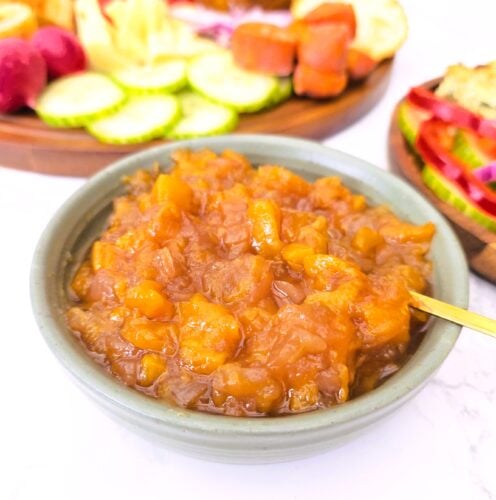
The chutney is best if left to mature for at least a few days so ideally you do need to plan ahead. You can eat it straight away, hot even, but its not going to be great. Once the chutney sits and matures, the vinegar sharpness starts to soften and all the flavours start to blend and become richer.
If you are going to properly can and seal the jars, you can make chutney many months in advance. This is ideal for gifting etc. If you do want to make the jars shelf stable, you will need to sterilise your jars and follow procedures to make sure they are sealed properly.
It will keep for years sealed and many months in the fridge once the jar is opened. You must be careful to ensure that you don’t cross contaminate however – a bit of rogue butter on a knife or a crumb of cheese can make a preserve spoil much earlier than it should.
Canned Peach Chutney Tips
You don’t need to stand and stir the chutney the whole time it is cooking. But it is important to make sure it is given a stir as everything is melting together. And then I tend to hover a little more towards the end of cooking as it is starting to thicken up.
The actual cooking time will vary depending on the quantity you make and the size pan you use. A pan where there is less visible surface area will take longer to evaporate some of the liquid. A wider pan will be quicker.
The trick is to make sure that the chutney cooks for at least half an hour. This gives the onion and apple enough chance to soften. If it is still quite thin after this time, then you can turn up the heat to boil off the liquids faster.
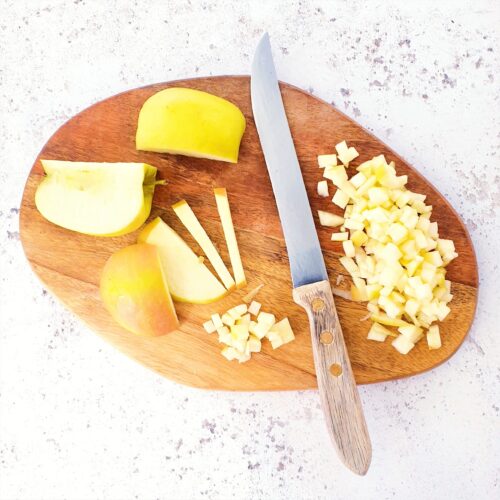
I cut the onion and apple very fine in this recipe because whilst they do provide bulk and body to the chutney, I don’t like large visible chunks. They also cook down faster. The hero of this chutney is the peaches.
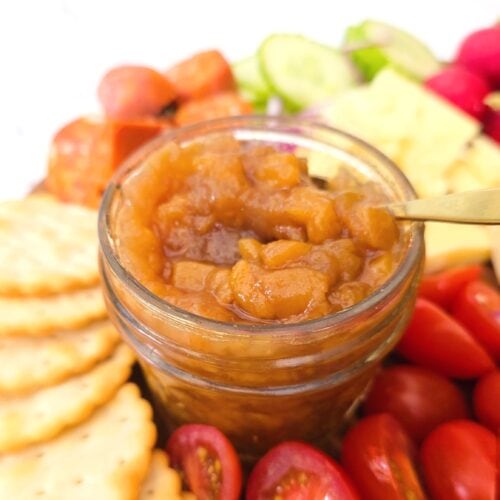
Don’t forget to let me know in the comments if you try making this recipe – I want to know what you think and if you made any substitutions, how did it turn out?
Still Have Questions?
Simple! Just contact me and I will do my best to help as quickly as I am able. Head over to my Contact Me page, any of my social media channels or post a comment at the bottom of this page and I’ll see what I can do.
Pin Easy Canned Peach Chutney Recipe For Later
Hit one of the share buttons to save this page to your Pinterest boards so you can come back and find it at anytime!

Keep Up to Date
Make sure you SUBSCRIBE to my newsletter and avoid missing out on any of my newest and bonus content. Don’t worry, I promise not to spam you or bombard you too often. Plus you’ll receive a copy of my FREE 7 Day International Meal Plan!
Also please don’t forget to follow me over on my social media channels over at Facebook, Instagram and Pinterest. I love to interact with my followers and I’d love you to share my content with your friends too.
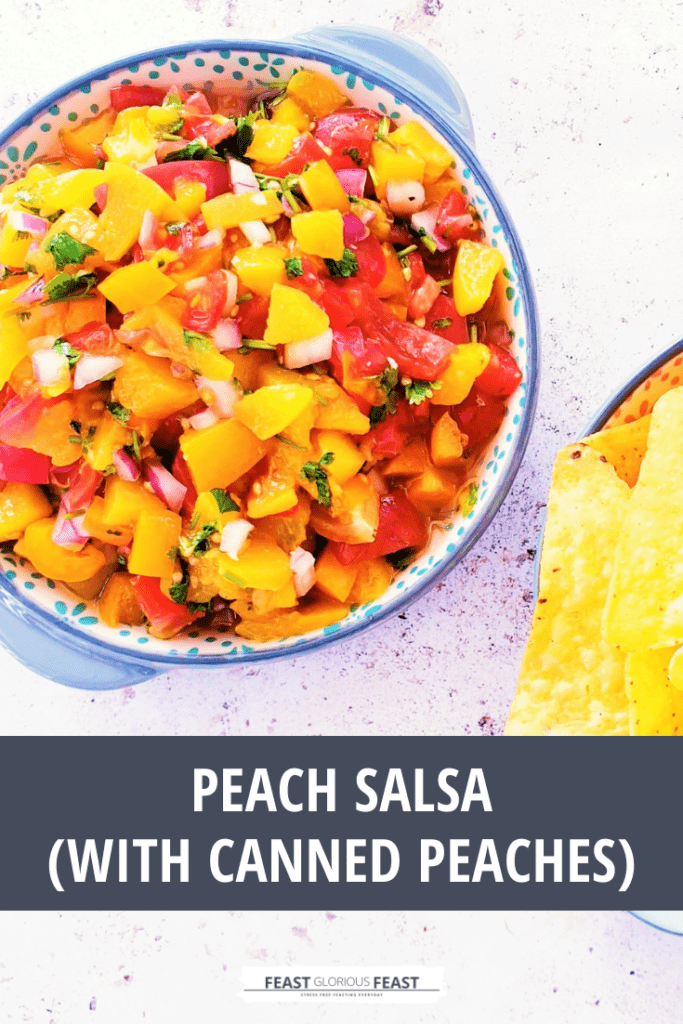
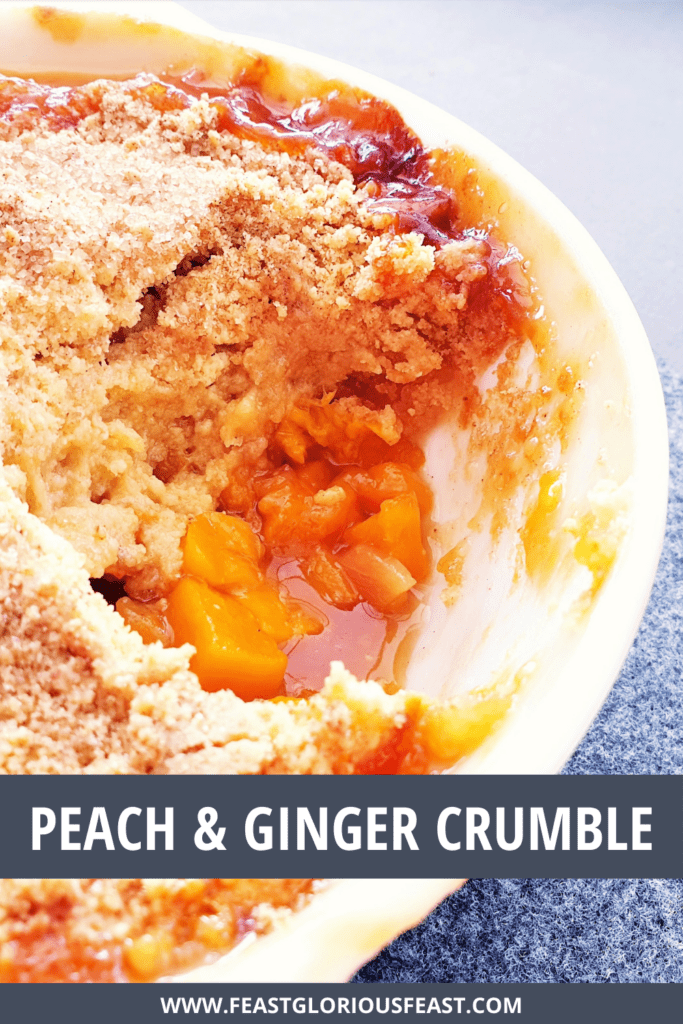
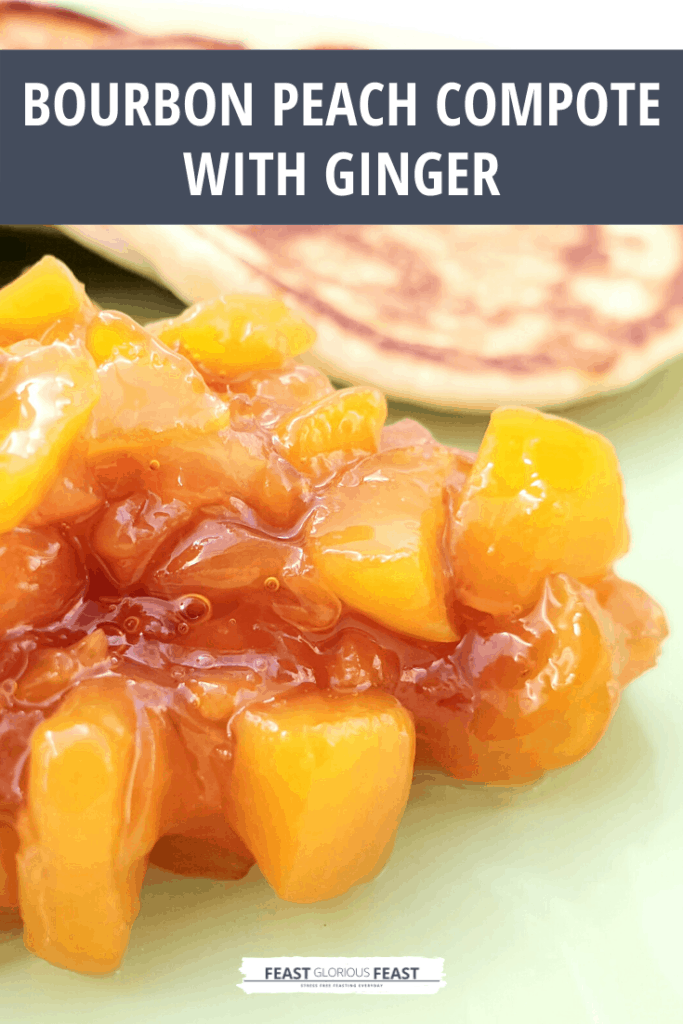
More Peach Recipes

The Recipe
Easy Canned Peach Chutney Recipe
Equipment
Ingredients
- 800 g Canned Peach Slices in Juice
- 100 g Onion
- 150 g Apple
- 200 ml White Wine/Cyder/Rice Wine Vinegar
- 80 g Light Brown Sugar
- ½ tsp Sea Salt Flakes
Instructions
- Open 800g Canned Peaches and drain the juice and set aside.
- Cut the peach pieces into small dice. Put into a medium saucepan.


- Finely chop roughly 100g Onion and add to the pan with the peaches.
- Finely chop 150g Apple – do not include the core but there is no need to peel. Add to the pan.
- Add 180ml White Vinegar, 80g Light Brown Sugar, ½ tsp Sea Salt Flakes to the pan along with half of the drained juice.
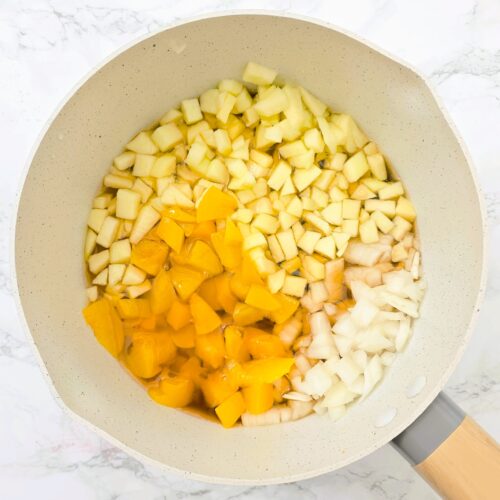
- Place on a medium high heat and keep stirring until the mixture starts to boil.Turn the heat down so it is just simmering and cook for around 30 minutes. Give it a stir every 5 or 10 minutes to make sure nothing is sticking. It is a good idea to keep a closer eye on it the thicker it gets.
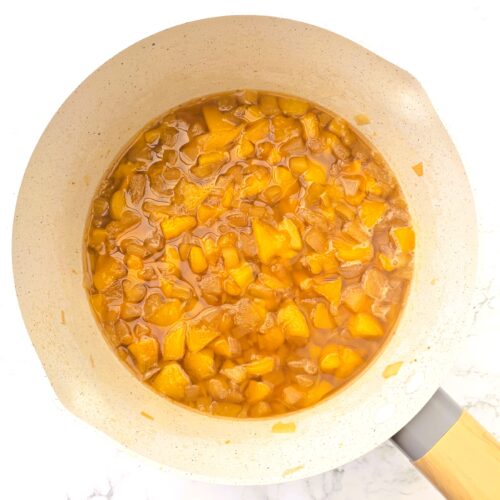
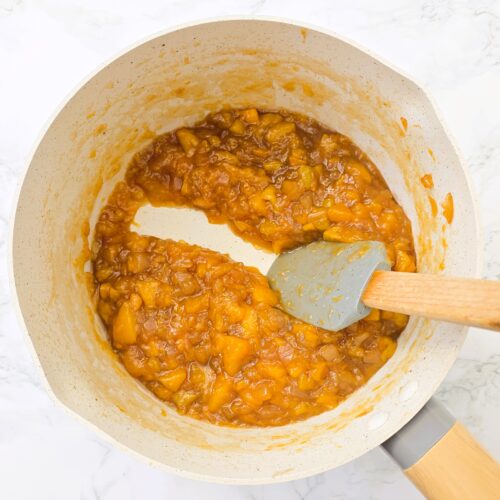
- The chutney is ready once you can drag your spatula through and the gap doesn’t immediately fill with liquid. If you need to, you can turn the heat up a little and continue to cook any excess liquid away until it is done.
- Carefully spoon the hot chutney into jars or your preferred container.
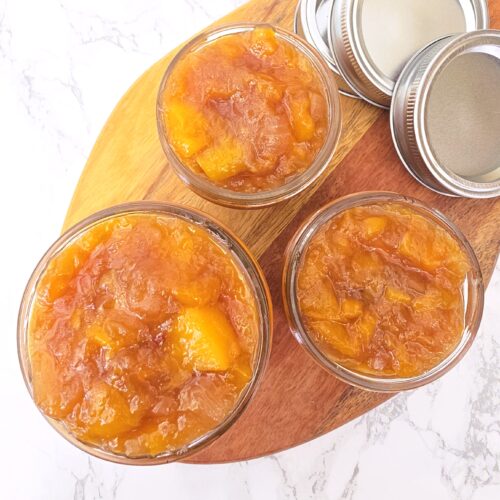
- Ideally allow a minimum of 3 days to help the flavours develop before tucking in.
Rob says
What a great idea, tinned peaches are always good and ripe. I’m glad I found this recipe as the chutney was delicious.
Louise says
I never thought of using canned fruit in chutney! I just had to try your recipe and it is absolutely delicious.